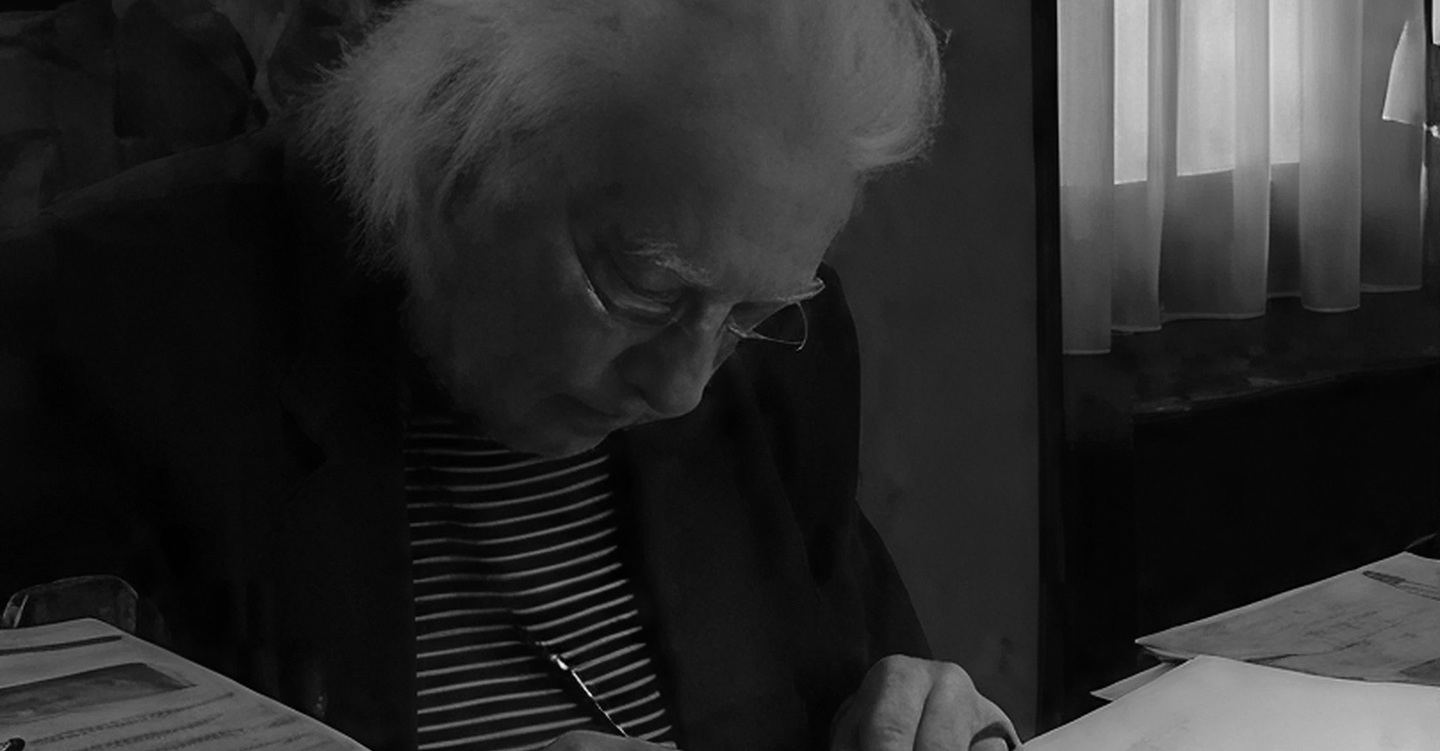
André Guillou and the foundation
André Guillou (1923–2013) was a leading historian and Byzantinist, whose work profoundly shaped the study of the Byzantine world and South-East Europe. A historian, archivist-palaeographer, and specialist of the Byzantine world, he devoted his life to the study of Byzantine, post-Byzantine, and Balkan societies, while playing an essential role in developing international scientific cooperation around these spaces and fields.
Born in Nantes in 1923, André Guillou trained at the École nationale des Chartes before joining the École française de Rome and then the École française d'Athènes. These years spent in Italy and Greece were decisive: they gave him an in-depth knowledge of the fieldwork, archives, libraries, and monasteries of the Byzantine Mediterranean world. Very early on, he directed his research towards the study of Greek Acts from Southern Italy and Sicily, as well as the monastic archives of Mount Athos, actively contributing to the renewal of Byzantine studies in the second half of the twentieth century.
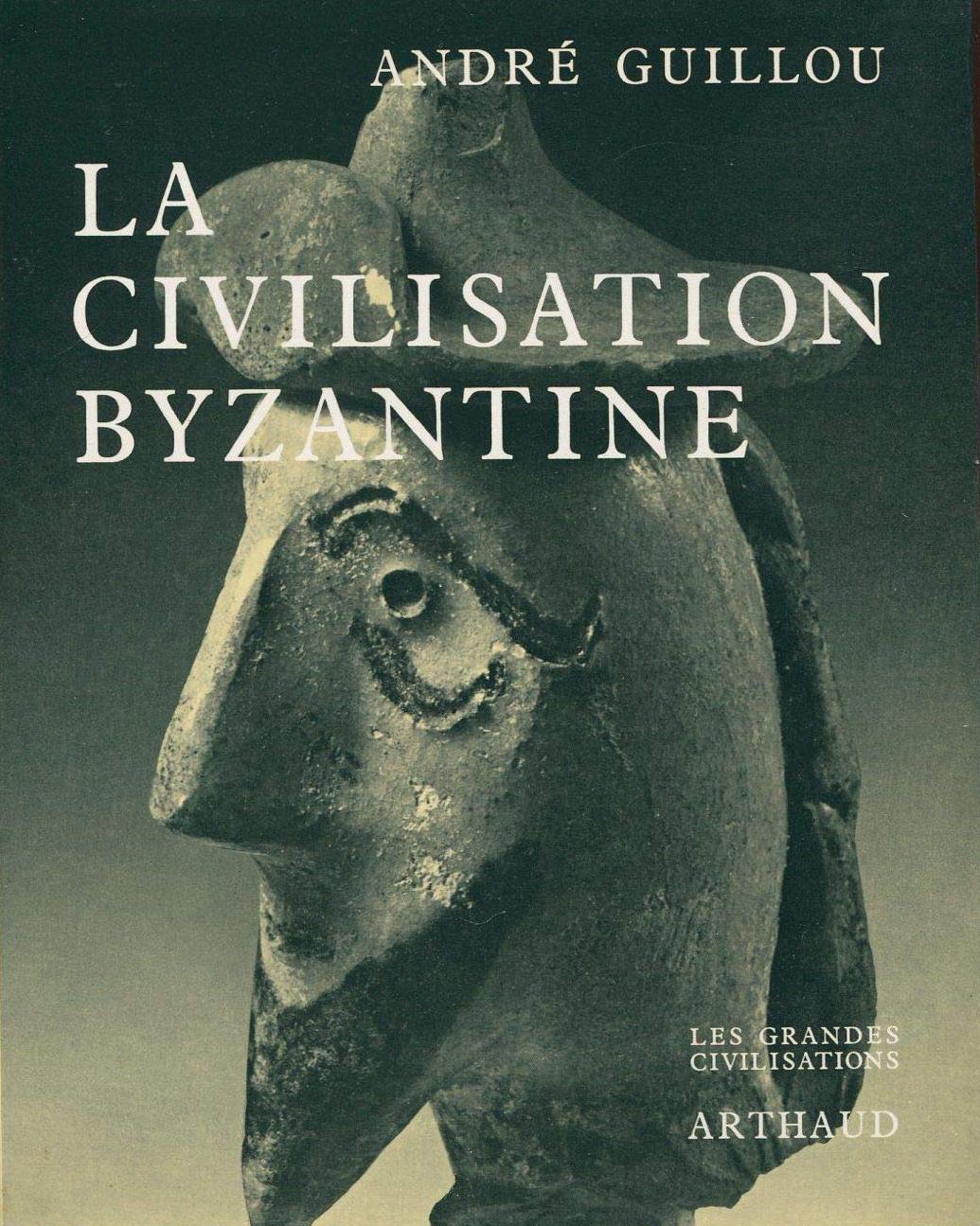
His scientific work is as impressive for its diversity as for its depth. A specialist in Byzantine Italy, Greek Sicily, the social structures of the Byzantine Empire, and the Athonite archives, André Guillou combined remarkable philological and diplomatic erudition with a rare capacity for historical synthesis. Among his most notable works are the volumes of the Corpus of Greek Acts from Southern Italy and Sicily, the Actes de Lavra published with Paul Lemerle, Nicolas Svoronos, and Denise Papachryssanthou, as well as his classic work, La Civilisation byzantine (1974), often regarded as one of the great contemporary syntheses on the Byzantine world.
A professor at the EHESS from 1968 to 1995, André Guillou trained several generations of researchers and closely followed work devoted to the history and sociology of the Byzantine world. His interest in the Balkans was part of a broader reflection on cultural legacies, circulations, and historical "gaps" within the European space. Deeply attached to South-East Europe, a region he knew intimately and where he maintained numerous scientific collaborations and friendships, he also played a central role within the International Association of South-East European Studies (AIESEE), which he chaired from 1999 to 2009 before becoming its honorary president.
It was in this spirit that, in 1993, together with Hélène Antoniadis-Bibicou and Maurice Aymard, he founded the Pierre Belon Association, hosted at the Fondation Maison des Sciences de l'Homme. Inspired by the figure of Pierre Belon du Mans (1517–1564), a Renaissance physician, naturalist, and traveller, the association sought to foster scientific dialogue and research on the Balkan, Hellenic, and Byzantine worlds. Pierre Belon, whose travel accounts of Greece, Anatolia, Egypt, and the Levant were often cited by Fernand Braudel, represented for André Guillou a symbolic figure of scholarly observation, intellectual travel, and openness to the Mediterranean worlds.
Building on this initiative, André Guillou founded the journal Études Balkaniques – Cahiers Pierre Belon in 1994, which he directed until his death. Conceived as a space for interdisciplinary and international dialogue, the journal was meant to advance scientific exchange between specialists of South-East Europe and to encourage comparative approaches to the Balkan, Hellenic, Byzantine, and post-Byzantine worlds.
Attentive to the historical long term as much as to contemporary realities, André Guillou saw the Balkans as a space of permanent contact, circulation, and cultural confrontation, shaped by Byzantine, Ottoman, and Mediterranean legacies. As he himself wrote, "subject to rival outside influences as much as to internal pressures, the Balkan area has been and remains, in the true sense of the word, a field of experience for alternative systems."
After retiring from the EHESS in 1995, André Guillou continued his scientific work, publications, and involvement in international research networks with remarkable energy. Based at the Fondation Maison des Sciences de l'Homme, he continued, up to his final days, to lead the journal, support young researchers, and develop projects devoted to the Balkan and Byzantine worlds. His body of work, his rigour